The Pareto Principle: The 80/20 Rule
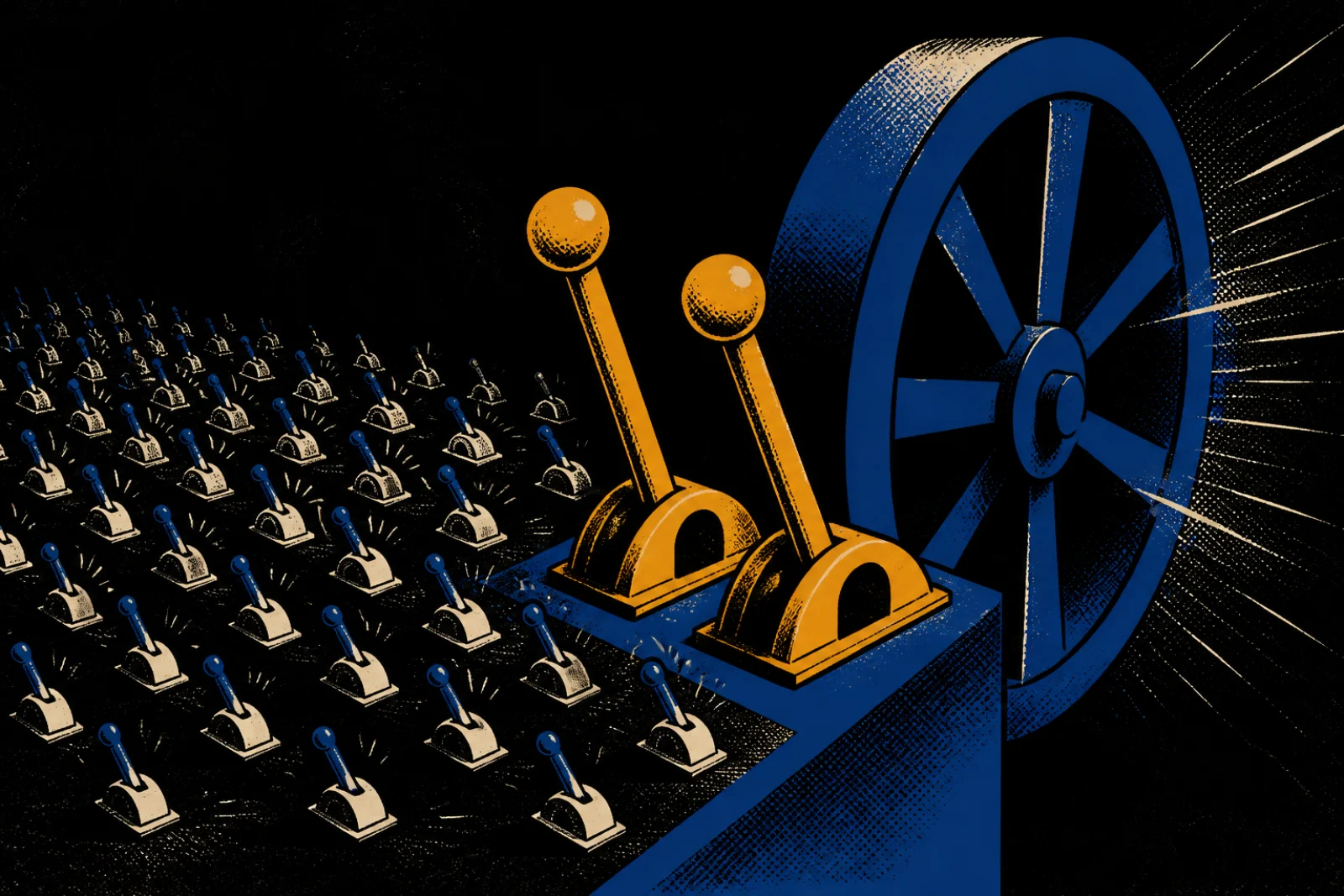
Being productive is not necessarily about doing more. Sometimes it is about identifying what matters most.
That is where the Pareto principle, commonly known as the 80/20 rule, becomes useful.
It is commonly expressed as 20% of inputs producing 80% of outputs. But 80/20 is not a universal mathematical law. The real distribution could be 70/30 or 90/10. The important idea is that results are often unequally distributed.
Where did it come from?
The principle is associated with Italian economist Vilfredo Pareto, who observed an unequal distribution of wealth and land ownership. The idea was later applied to business, productivity, economics, software, and learning.
Imagine having ten tasks
You might discover that only two tasks create most of your meaningful progress. Instead of treating all ten as equally important, ask which two matter most. That is the 80/20 mindset.
Learning
Imagine you are learning English. You could spend months memorizing obscure vocabulary, or first focus on common words, basic grammar, sentence structure, and frequently used expressions.
A relatively small set of fundamentals can provide a huge amount of practical ability.
Programming
Imagine a project has one hundred bugs. Perhaps ten major bugs are responsible for most of the problems users experience. Fixing those first may create far more value than randomly fixing small issues.
Time
You might spend eight hours working, but perhaps only two of those hours produce most of your meaningful progress.
That question is more useful than simply deciding to work harder.
Do not misunderstand 80/20
The rule does not mean you should ignore everything else. Some low-impact tasks are still necessary, and you should not force every situation into an exact 80/20 split.
It is a thinking tool, not a magical formula.
Takeaway
Whenever you have too many things to do, ask which few things create the biggest result. Do those first.
Productivity is not always about doing more things. Sometimes it is about doing the right things.