The Scientific Method: Don’t Guess. Test.
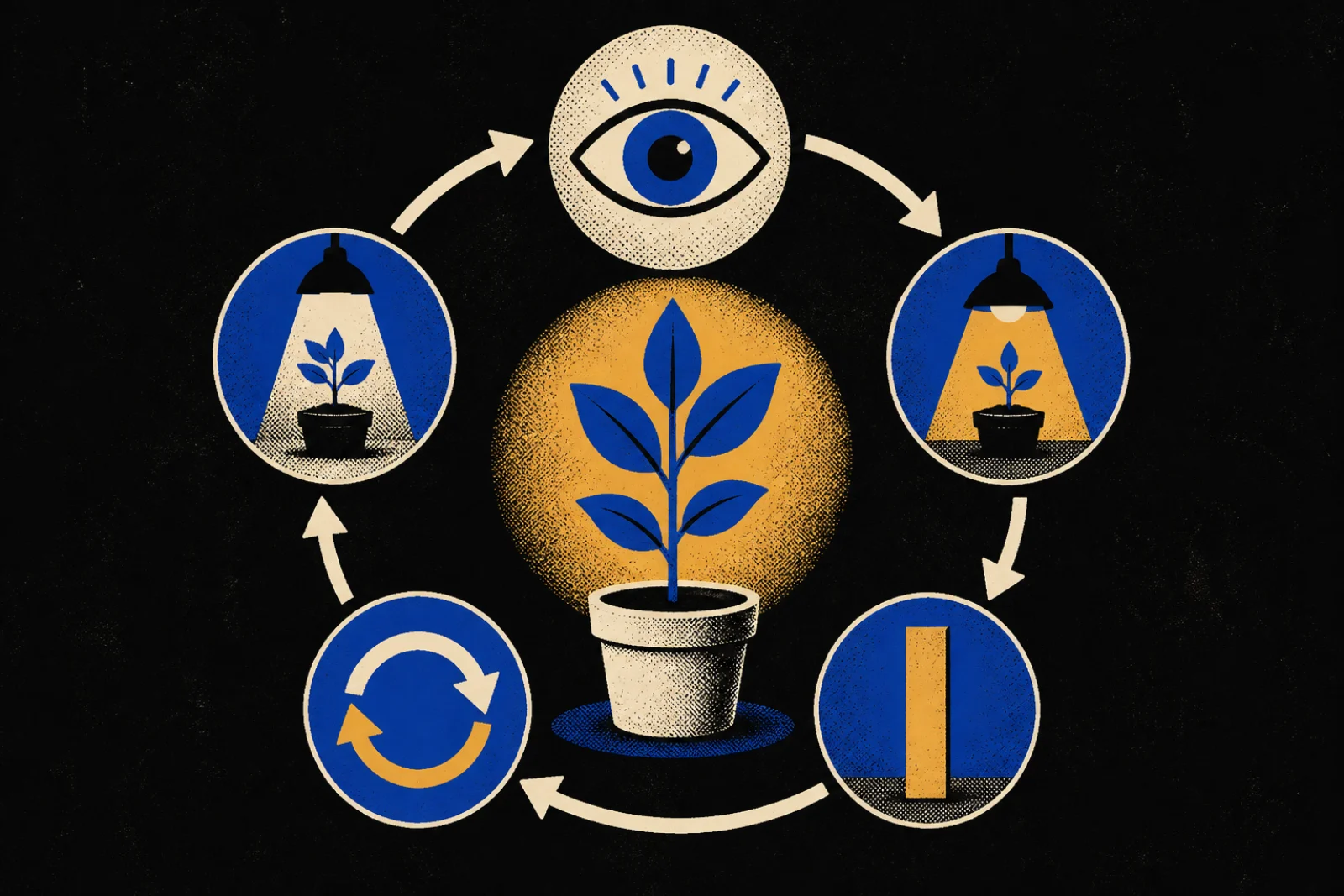
We make assumptions constantly: this probably works, this must be the reason, or I think this is true.
But how do we move from a guess toward reliable knowledge? One of the main tools is the scientific method.
Step 1: Observe
You notice something. For example: my plants seem to grow better near the window.
Step 2: Ask a question
Turn the observation into something testable: does sunlight help plants grow faster?
Step 3: Form a hypothesis
Make a prediction: if a plant gets more sunlight, it will grow taller.
Step 4: Experiment
Now test the idea. Plant A receives more sunlight, while Plant B receives less. Keep the other conditions as similar as possible.
Step 5: Collect data
Measure what actually happens. Maybe Plant A reaches 18 cm while Plant B reaches 10 cm. Now we have evidence.
Step 6: Draw a conclusion
Does the evidence support the hypothesis? If yes, confidence increases. If no, we need to reconsider the hypothesis.
Step 7: Repeat
One experiment is not automatically enough. Other researchers can repeat the work. If similar results appear repeatedly, confidence increases.
Why this matters outside science
You can use this mindset in everyday life. Suppose you believe waking up at 6 AM makes you more productive. Instead of arguing about it, test it.
Try it for two weeks and track hours worked, tasks completed, focus, sleep, and energy. Now you have evidence about your own situation.
Takeaway
The scientific method teaches a mindset: do not ask only what you believe. Ask how you could test whether you are right.
The strongest beliefs are not the ones we refuse to question. They are the ones that continue to match the evidence after being tested.